From Concept to Completion: Navigating the Custom Jersey Design and Production Journey
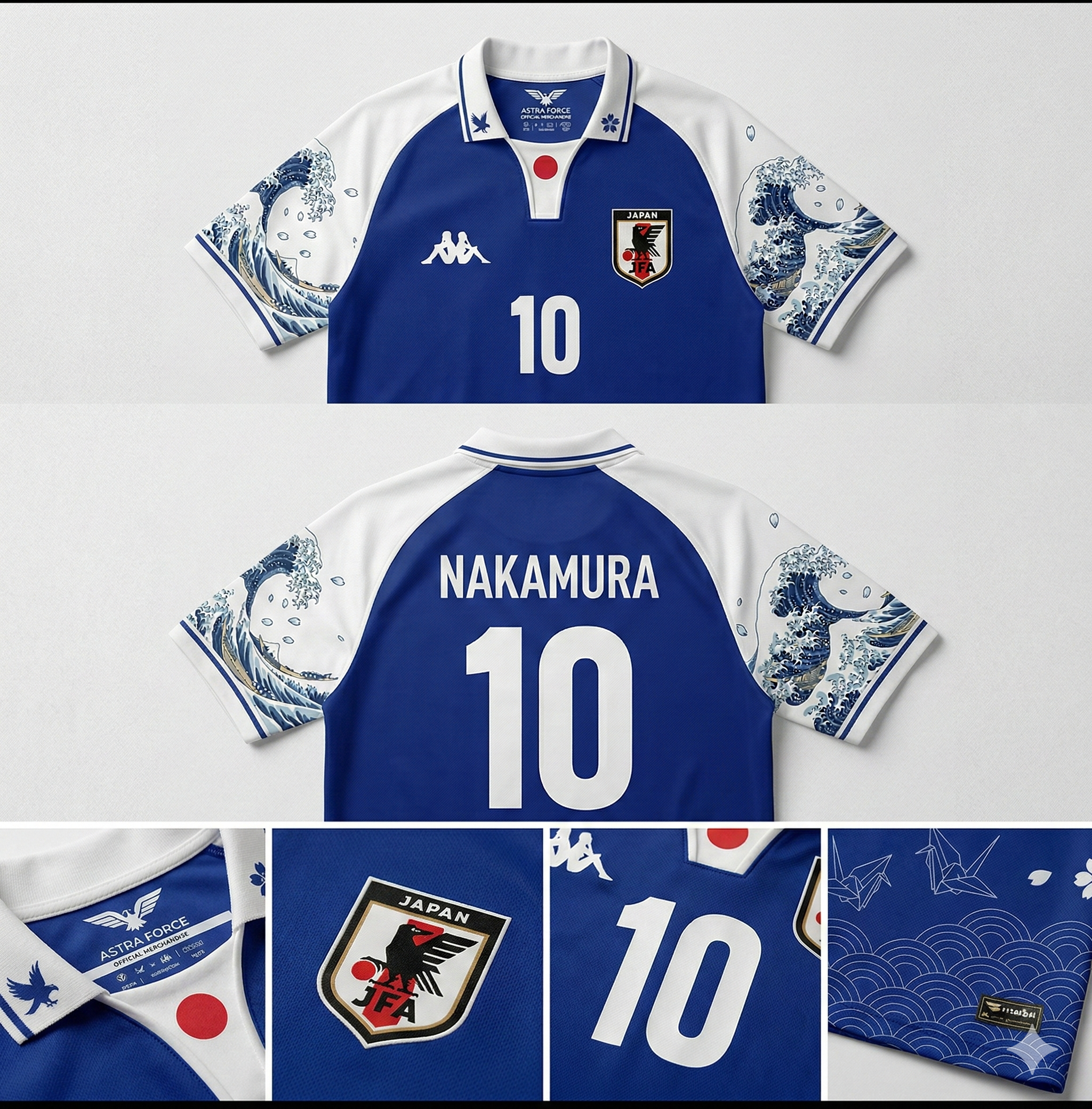
Designing a custom jersey is more than just making a cool logo; it's about a journey from a creative idea to a physical product that athletes can wear. For many, this process feels complicated, but it becomes much simpler when you understand the roles of design and production and the different types of images and files you will encounter. Whether you are creating a kit for your local club or launching an apparel line, here is your essential guide.
The Design Phase: Bringing Your Vision to Life
The first step in any custom jersey project is the Design Phase. This is where creativity takes center stage, and your ideas are transformed into a visual concept.
What to Expect during Design Presentation
Your designer will present your design using a few different types of 2D Images. These are not meant to be 100% technically accurate but are designed to help you visualize what the final product looks like to the consumer:
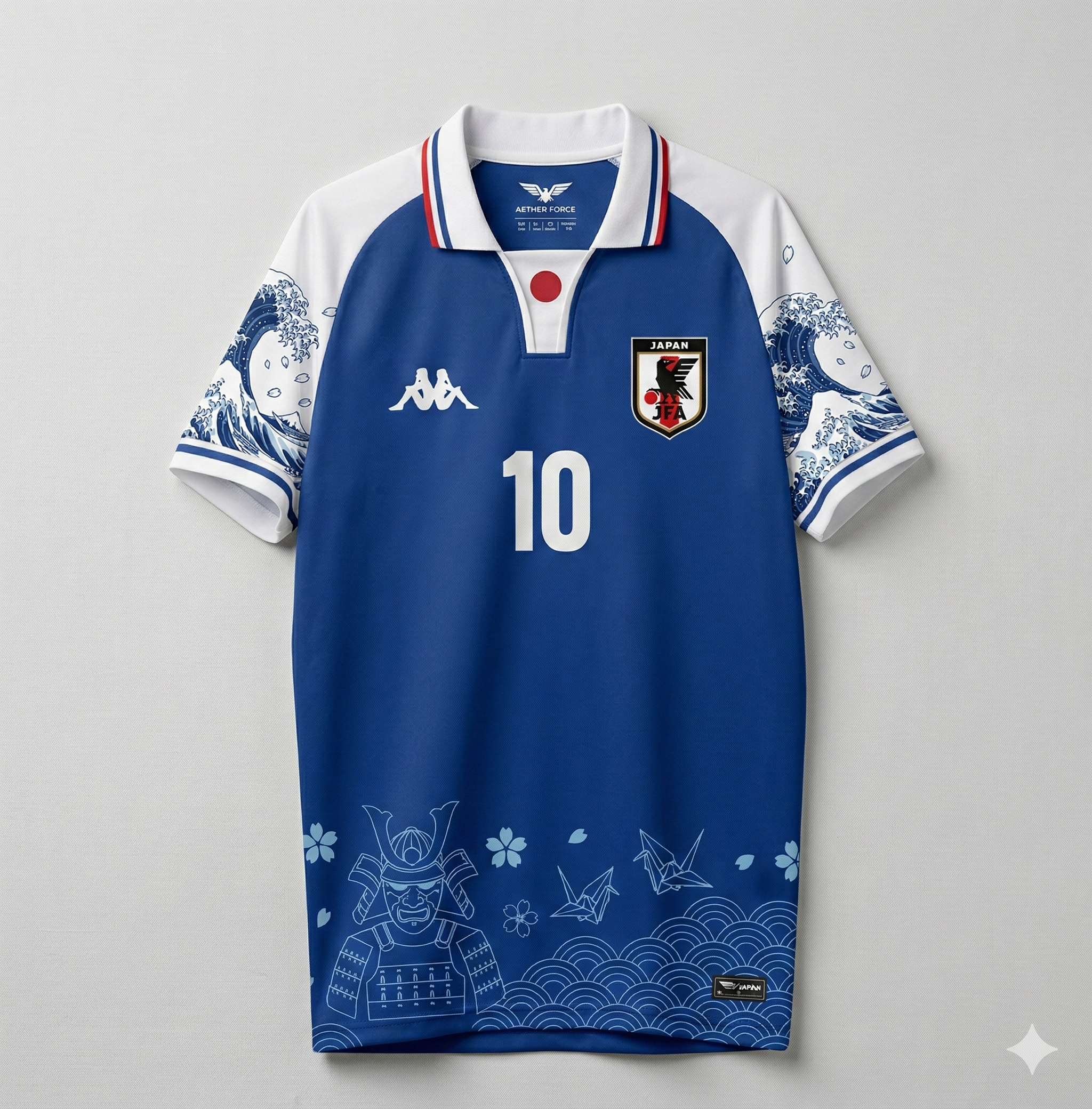
- Photorealistic Flat Lay Mockup: A high-quality, shaded image of the jersey laid flat, often slightly stylized with natural folds. This is used for marketing, client presentations, or putting on an online store to show the final product.
- Ghost Mannequin or Invisible Mannequin: An e-commerce image where the jersey is shaped as if being worn by an invisible person. This style, along with other 2D presentation images, is essential for showing the garment's volume and inside details.
- Lifestyle Shot: A photograph of a real model wearing the jersey in a natural environment, used to sell the overall aesthetic and "vibe" of the apparel.
- 3D Static Rendering: A highly realistic, computer-generated image that uses true fabric physics to show exactly how a specific material (like polyester mesh) drapes and reflects light. This is common for high-end sportswear brands.
Example: Our Japan "Samurai" Concept
To illustrate, let's look at the progression of the custom Japan kit we developed together. The initial step was a photorealistic flat lay mockup that presented the complete design concept in a highly realistic way:
The Production Phase: Turning Art into Reality
Once you approve the design concept, the project enters the Production Phase. This is the critical handoff from design to the factory that will actually manufacture the physical jersey.
The biggest distinction to understand is that the factory cannot print directly from the shaded, realistic images used for presentation. They require precise, flat, vector-based files with all complex patterns and graphics ready to scale without distortion.
What is Required for Manufacturing: The Technical Specs
The factory requires a Sublimation Print File to manufacture the jersey. This is a 2D vector file where the entire design is broken down into its individual fabric panels:
- Front Panel
- Back Panel
- Left Sleeve and Right Sleeve
- Collar Pieces
All design elements — like a detailed logo, or even a specific request such as a samurai armor pattern or wave pattern on sleeves — must be laid out flat on these panels at 100% scale.
The Design-to-Production Pipeline in Our Project
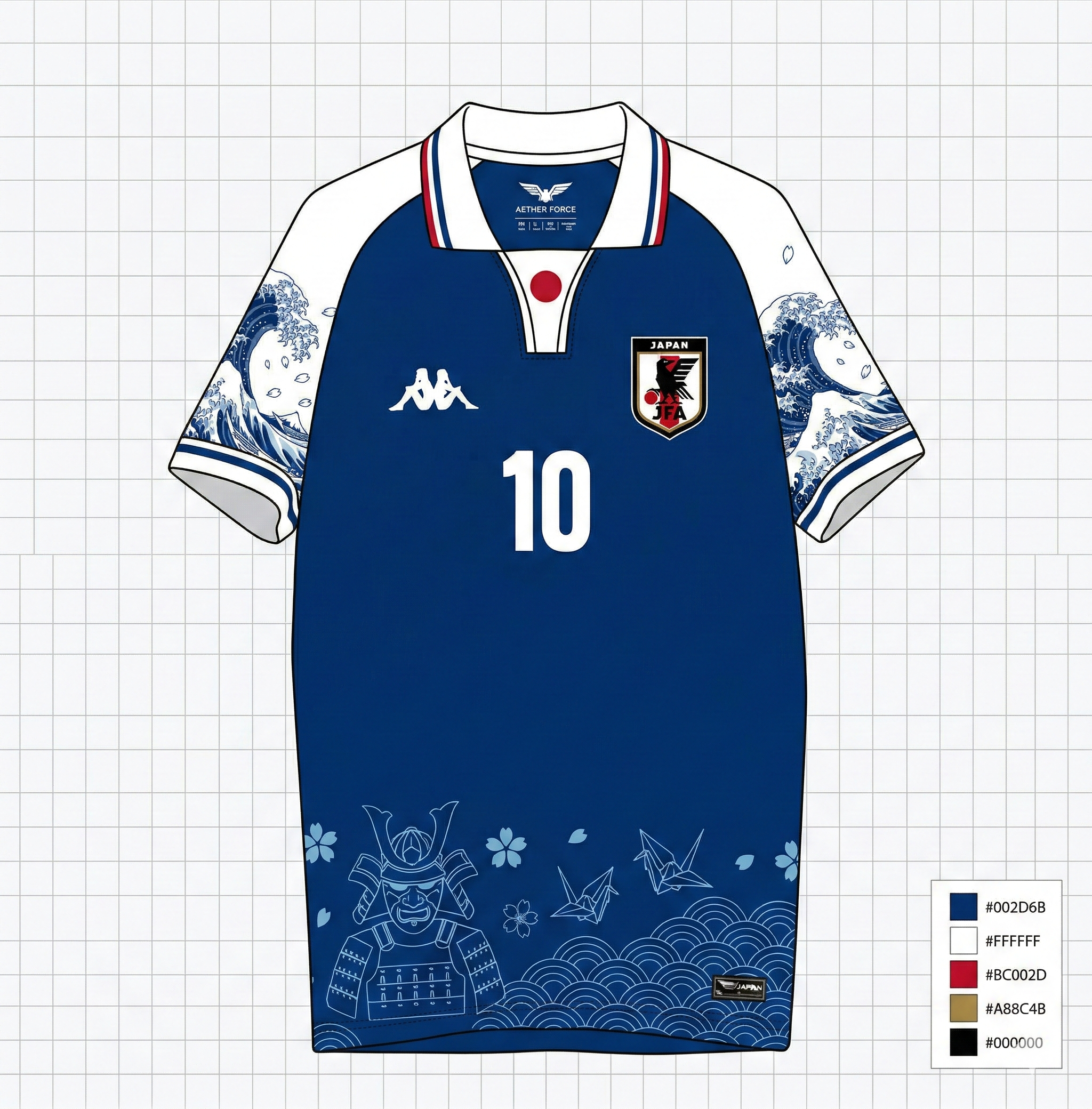
In our project, we moved from the photorealistic mockup to a colored flat presentation. This is an unshaded 2D drawing that tells the manufacturer exactly where graphics, logos, and colors must be placed:
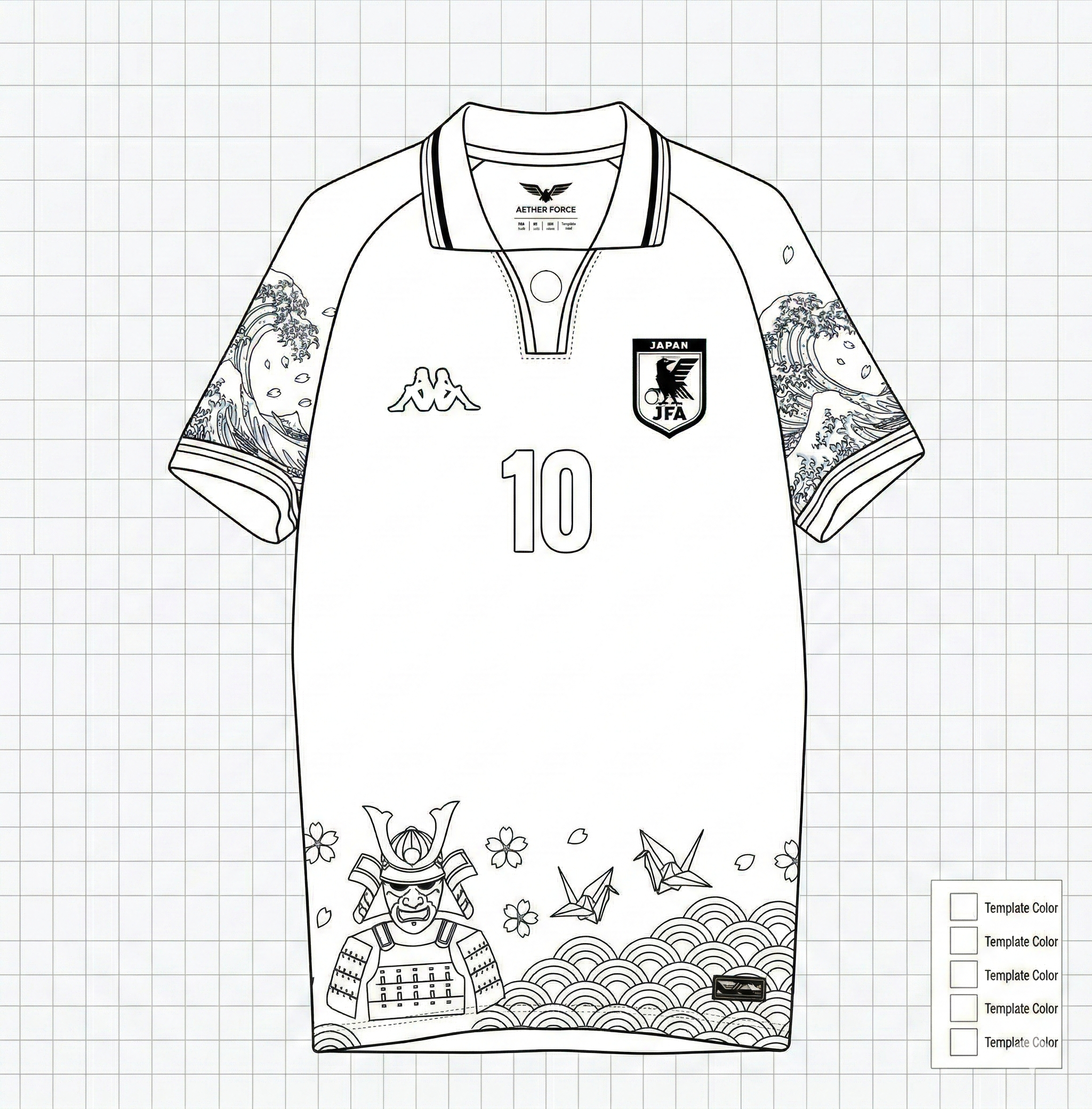
Finally, we created a technical outline. This is a crucial element for a manufacturing Tech Pack, providing a completely blank canvas for color placement:
A factory team will also create a Marker Layout, which is a technical map showing how all individual fabric panels are arranged on the fabric roll to minimize waste.
The Modern Frontier: 3D Garment Technology
For high-end and advanced presentation, many designers use specialized 3D garment software like CLO 3D or Marvelous Designer to create:
- 360° Interactive Turntables: Which allow you to click and drag to spin a jersey around on a webpage.
- 3D Animations or Walk Cycles: Digital avatars that show how the jersey moves and behaves in action.
While a design concept can be simulated in a 2D drawing to look 3D, actual interactive or animated formats require these specialized files.
Interactive 3D Jersey: Morocco Concept
Below is a live, interactive 3D model of a Morocco football jersey concept — exported from CLO 3D. Click and drag to rotate it, scroll to zoom. This is the kind of experience that 3D garment technology enables:
Your Next Step: Start Your Project
Understanding the difference between Design and Production and the different 2D and 3D files is key to a successful project. AI is a powerful tool for conceptualization and speed, but for your custom kit to be made, you will need to take those final concept images and work with a sportswear professional to create true print-ready vector patterns.
Ready to start your journey?
Bring your creative ideas to designjerseyai.com, and let's create the ultimate custom kit together!
Start Designing Now